Operating note 02 / Admission
When the reader says no
A refused entry is an operational question, not a verdict about the person wearing the band. Find the failed step before choosing the remedy.
Separate the read from the rule
Our attendee reaches the gate and presents a wristband. First, the reader must communicate with a compatible credential. Next, the application must interpret that credential and establish the appropriate entitlement. Finally, it must apply the checkpoint’s current rules. A single green or red indicator compresses this chain into a short message, but staff need enough detail to distinguish the underlying outcomes.
No read can mean poor orientation, damaged hardware, an incompatible band or a reader fault. A successful read followed by refusal can mean the wrong day, the wrong zone, a revoked credential or a repeated-entry restriction. Asking the attendee to tap again helps some physical presentation problems. It does not correct an entitlement that the system has already rejected.
Know where the decision happens
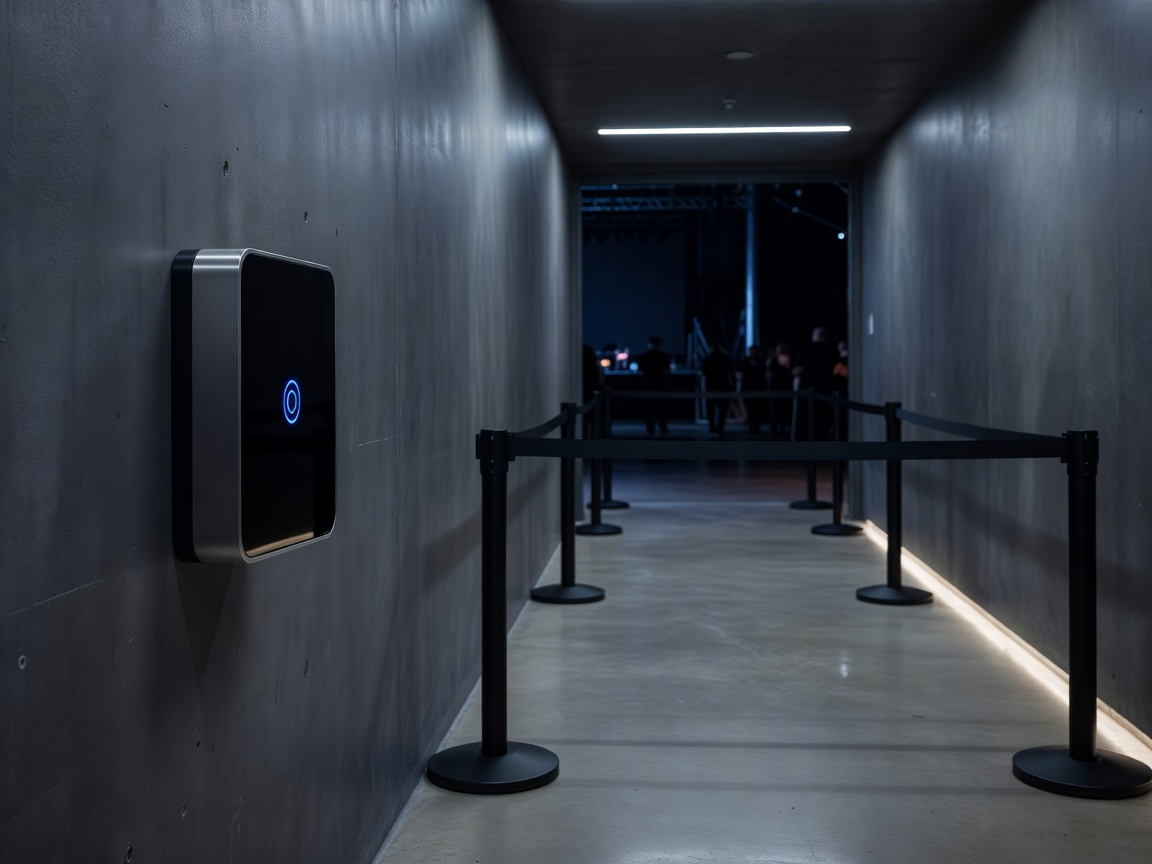
An online reader may ask a remote service for each decision. Another design may use a venue-local server or a controller holding a copy of admission permissions. Some devices can evaluate cached rules when the network disappears. “Works offline” is incomplete unless the supplier explains which operations remain available, how current the local data is and how conflicting records are reconciled afterwards.
Offline capability creates a consistency question. If one isolated gate records entry, another gate may not learn about it immediately. A replacement issued at the help desk may also take time to invalidate the original credential on disconnected devices. The event must choose an explicit outage policy that balances service continuity, fraud exposure and safety. Staff should not invent that policy under queue pressure.
Transport protection matters when devices communicate with services. IETF TLS 1.3 is a relevant modern protocol, but an encrypted connection alone does not establish correct device permissions or safe key storage. A complete design includes authenticated devices, restricted administration and a way to remove lost equipment from service.
| Observed outcome | Check first | Next step |
|---|---|---|
| No credential detected | Position, reader readiness, nearby bands | Try the approved presentation method; use the help point if unresolved |
| Credential read, entry denied | Reason code, date, zone, activation | Verify entitlement without publicly exposing account details |
| Already admitted | Prior entry and re-entry policy | Refer to authorized staff; do not casually reset status |
| Service unavailable | Device connectivity and incident notice | Follow the documented outage procedure |
Build an exception route beside the queue
A help position should let staff investigate without holding every following attendee at the reader. It needs an approved verification process, suitable privacy and a clear route back to admission. Record a useful reason code and action, rather than collecting unnecessary narrative about the person. Only authorized roles should amend entitlements or override a refusal.
Operators also need responses that are accessible. Colour alone should not carry the outcome: readable text, distinct symbols or an appropriate audible cue can support it. W3C’s WCAG 2.2 is a useful reference for digital interfaces, but the physical gate also needs practical testing with different reach, mobility, vision and hearing needs. Offer an alternative when a person cannot position a wrist at the installed reader.

Do not confuse entry control with safe exit
Re-entry is a policy choice implemented through system state. Some events allow it freely, some require an exit record and others prohibit it. Tell attendees before they leave. Anti-passback logic can stop a credential being used for consecutive admissions without an intervening authorized transition, but its exact behaviour is deployment-specific. A missing exit record can therefore become an exception rather than evidence of misuse.
Emergency egress must follow the venue’s approved safety arrangements. Wristband validation should not become an improvised barrier to evacuation. If exit readers are used for occupancy estimates, explain their limitations: unrecorded movement, shared routes and device outages can make those figures incomplete. An access log is not automatically an authoritative live headcount.
Measure the whole encounter
A laboratory read time is not a queue-throughput promise. People approach at different speeds, pause for instructions, carry bags and sometimes need assistance. Measure the complete interaction at a realistic lane, including exceptions, rather than multiplying a reader’s headline speed. Keep incident review focused on recurring causes and process improvements. The best outcome is not merely a fast green light; it is a correct, understandable and recoverable admission decision.