Operating note 03 / Participation
Light, payment and participation
Once inside, the same strap can become a payment token or part of the show. Treat every extra feature as a separate system until the integration is demonstrated.
A lighting cue is not an access check
Illuminated audience wristbands can turn a crowd into a distributed lighting surface. A controller sends cues and compatible bands respond with programmed colours or patterns. Designs may use radio-frequency signals, infrared or other arrangements. Some address groups or seating areas; others offer different degrees of individual control. It is not safe to infer the control method by watching the effect.
The lighting hardware usually needs a power source, LEDs and a receiver or control circuit. A passive admission chip may sit alongside it without powering or controlling it. This separation is useful operationally: a band can remain a valid entry credential even if its light stops working. The attendee-facing support script should explain that distinction instead of treating every fault as a ticket problem.

Plan the effect around the room
Production teams should test signal coverage with the actual stage layout and occupied audience areas. Infrared designs can be affected by line of sight, while radio systems have their own coverage and interference considerations. A seating map does not automatically become a reliable addressing map. Rehearse group assignments, late arrivals, replacement bands and the response to a lost control feed.
Also ask how the effect can be avoided by attendees who do not want to wear a flashing device. Publish suitable information about lighting effects and follow the event’s accessibility arrangements. If bands are collected afterwards, plan visible return points and safe handling of battery-powered equipment. “Reusable” only describes a possibility until collection, inspection and refurbishment actually happen.
| Feature | Additional components | Ask before deployment |
|---|---|---|
| Synchronized light | Powered light module, cue system and coverage | What happens when a band misses a cue? |
| Cashless purchase | Payment account or stored-value application, terminals and settlement process | Where is the authoritative balance, and how are refunds handled? |
| Activity check-in | Activation reader, application and participation rules | Is account linkage necessary and clearly explained? |
| Proximity interaction | Suitable active or passive sensing infrastructure | What is detected, at what precision, and with what consent or other lawful basis? |
The band does not become a bank card by default
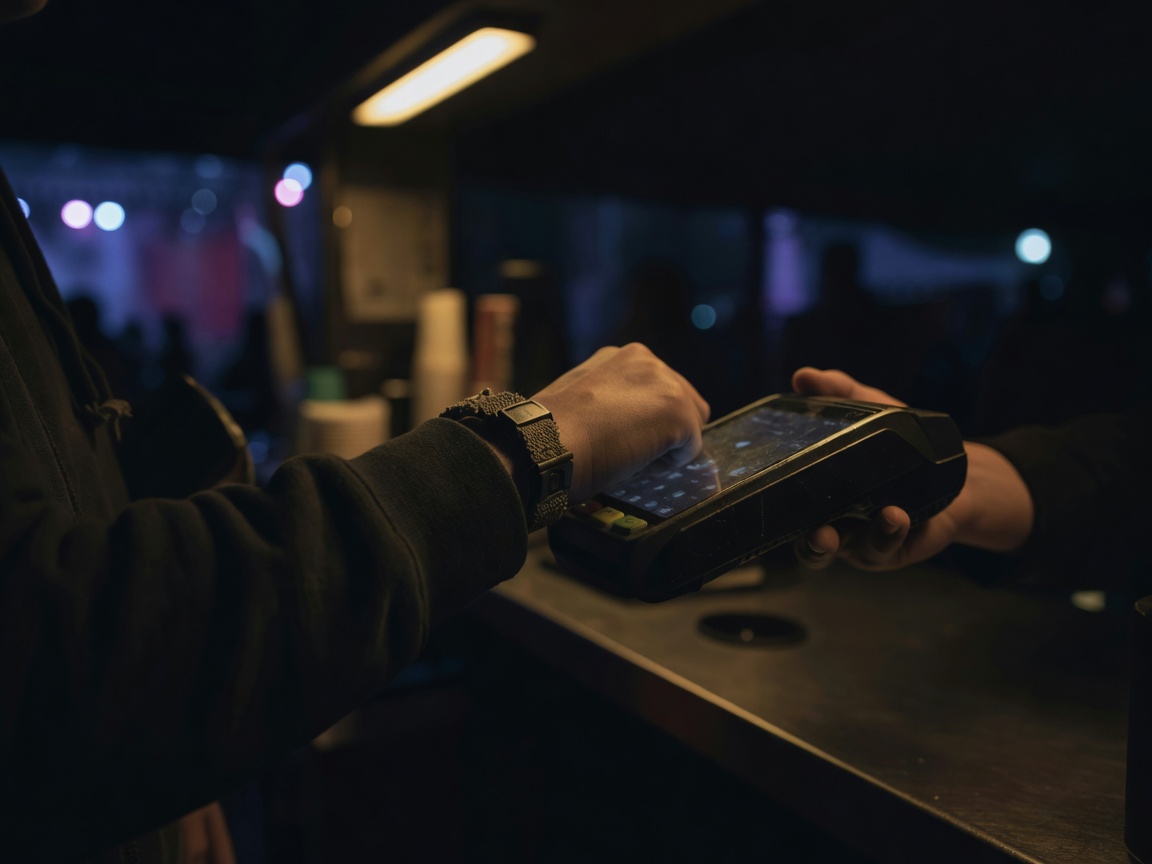
A closed-loop event wallet commonly uses the wristband as a token for a balance or account managed by the event’s payment service. Other designs may store value using a secured on-band application. An open-loop payment wearable is a different proposition involving payment-network credentials and acceptance arrangements. The attendee should be told which model applies before loading funds or attempting a purchase.
Ask where the authoritative balance lives, whether transactions can occur offline and how duplicate or delayed transactions are resolved. An offline terminal may need limits and a later reconciliation process. A successful access scan is not proof that a payment terminal can authorize a transaction. The payment and admission paths should have separate diagnostics and support ownership.
Make the money rules visible
Before a top-up, explain applicable fees, minimum amounts, balance checking, lost-band procedures and refunds. Do not imply that every unused balance is refunded automatically. Where payment-card data enters the system, the PCI Security Standards Council’s PCI DSS can be relevant to the organizations and environments handling it. A wristband token does not by itself remove the surrounding service from its compliance responsibilities.
For an attendee, the practical preparation is simple: find the accepted payment methods and refund instructions in the organizer’s official information. For an operator, it means rehearsing reversals, interrupted purchases and replacement-band transfers. A cashless-only environment also needs a considered approach to people who cannot use the standard top-up route.
Connect experiences without merging every record
Activity stations can register a visit, unlock a game or associate a photograph with an account. The system should collect only what the activity needs. A short-lived participation token may be enough; a complete ticket profile often is not. If an activity relies on Bluetooth LE, consult the Bluetooth SIG’s specifications and test the actual devices rather than treating proximity as precise location.
End the design review with failure questions: can an attendee still enter if lights fail, buy refreshments if a wallet service fails, and decline an activity without losing essential access? Clear boundaries make the experience more resilient. They also make it easier to explain what the band does without attributing every feature of the venue to one small piece of wearable hardware.